The bell that time forgot ... until now
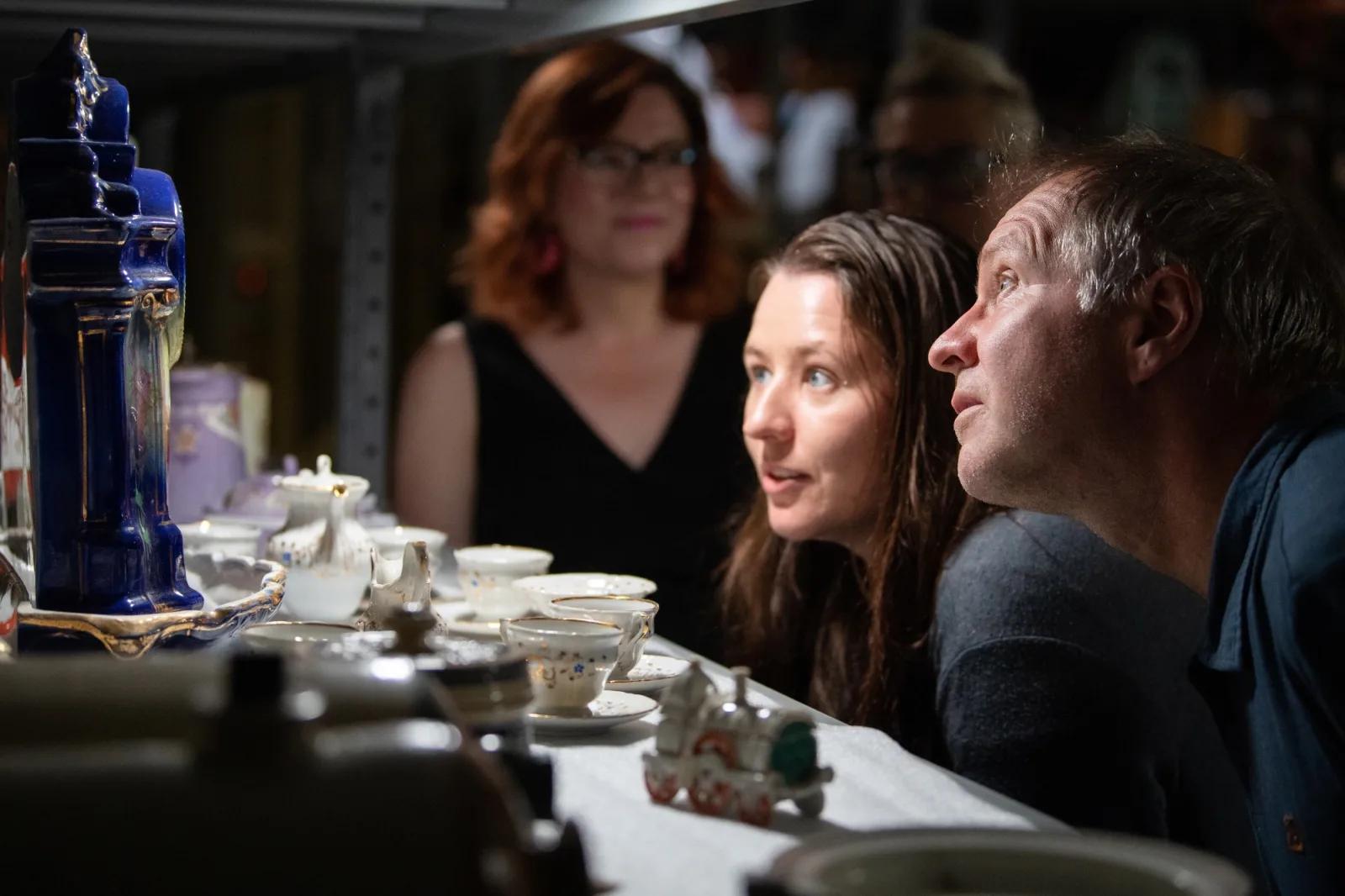
Sovereign Hill Collection Officer Katie Topp uncovers the mystery of a 160-year-old bell, a ten-year search, and a Ballarat football club that never gave up.
The Australian Centre for Gold Rush Collections consistently receives research enquiries. This is a wonderful part of our role as an accredited museum to assist the public in accessing historic objects and the stories they tell. Some are straightforward. An appointment to view an object, a request for image permissions. Others require a bit more digging. This is one of those stories.
A ten-year search
In a collection of over 150,000 objects, the occasional mystery is to be expected. We uncovered just such a mystery when the Gold Rush Centre was contacted by representatives of the EastPoint Football Netball Club Memorabilia Committee, a volunteer group responsible for collecting and documenting objects related to the Golden Point and East Ballarat Football and Netball Clubs.
The Committee had been searching for a long time. For over a decade, they had been trying to track down the former Timekeepers Bell. The bell had hung in the old timekeeper's box at the Eastern Oval, and was used for many years to signal the start and end of play. A traditional siren was never an option at this particular oval, located close to the train station, because players would regularly mistake train horns for the end-of-play signal. The bell was the solution.
When the old timekeeper's box was removed during renovations to the oval, possibly following damage sustained in a fire, the bell was misplaced. For ten years, Committee members Peter Storey, Garry Fenton, and Michael Walsh contacted organisations across Ballarat trying to pick up the trail. There were whispers that the bell may have made its way to Sovereign Hill.
So in 2017, the Committee reached out to us. The curator at the time searched the collection, but without a clear description or any distinguishing features to go on, no match was found.
The trail went cold again.
A new clue
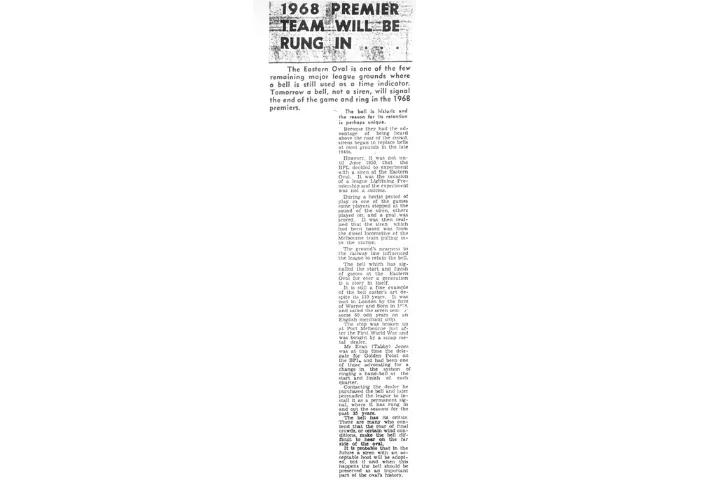
In February 2025, the Committee came back, this time with something new. They had uncovered an article from the Ballarat Courier, dated 4 October 1968, that described the bell in more detail than was previously known. According to the article, the bell had been 'cast in London by the firm of Warner and Sons in 1858'.
This was an excellent discovery, as it gave us more clues to enable us to possibly identify a matching bell.But the story got even more interesting. Before coming to Ballarat, the bell had spent sixty years aboard an English merchant ship. After the First World War, the ship arrived at Port Melbourne to be broken up for scrap metal. The bell was rescued from the wreck by Evan Jones of the Ballarat Football League and brought to Ballarat, where it began a new life at the Eastern Oval sometime in the 1920s or 1930s.
Armed with this new information, I remembered seeing a large bell that had been relocated during the redevelopment of one of our Collection Stores at the Gold Rush Centre.
It was time to investigate.
Following the evidence
I knew where it was currently located, so I headed to the store to investigate whether it matched what was described in the article. The first thing to do was see if the bell had an Accession Number — the unique identifier given to every object in the collection, consisting of the year the item was accepted followed by a sequential number. This bell had none.
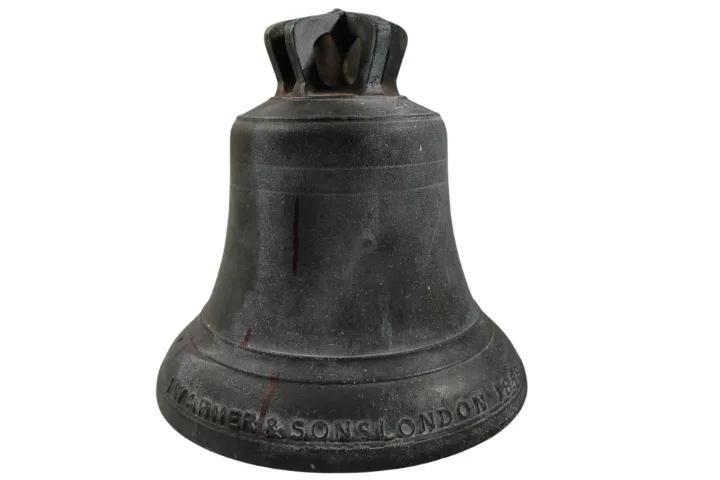
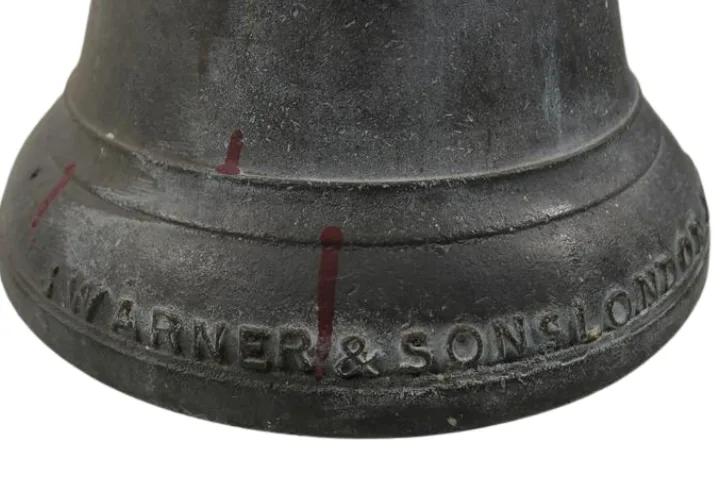
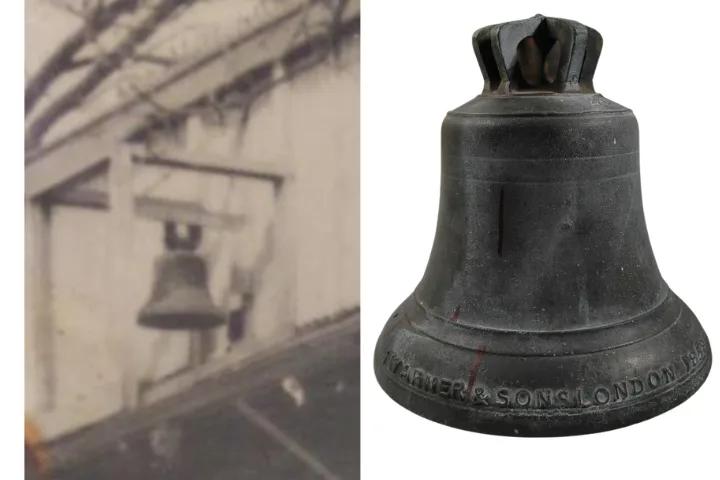
I was not deterred by this lack of a number, so I then compared the details from the article. The date and maker's location on the bell, London 1858, were a match to the Courier article. The bell also bears the name of J. Warner & Sons, also known as John Warner & Sons, which also matches up with the article. This was a promising start!
But this was only the beginning of the search.
Then we had to do some further research about the bell itself. It turns out that J Warner & Sons was a metalworks and bell foundry based in various locations around England, with their primary manufacturing foundry located in London. The company was established in 1739 and continued operating until 1949. Some of their most famous bells include the quarter chime bells at the Houses of Parliament in London. The large hour bell, also known as Big Ben, was originally made by the Warner & Sons foundry but had to be replaced due to a fault in the casting. Quite the pedigree for this humble bell we had on our shelves!
The photograph that changed everything
After researching its history, we tried to track down any information about when the bell came to Sovereign Hill. We went through our records and reached out to people who may have information about it, including the former curator of the Gold Museum. This led us to a suggested date range for its arrival, allowing us to search our records, both digital and paper based, looking for any mention of the Eastern Oval or the acquiring of a large bell.
Unfortunately, no relevant records were identified, and it was looking increasingly less likely that any paperwork detailing the bell's removal from the oval existed at all.
Although no documents were found, we then identified a photograph located in the Ballarat Historical Society Collection, which is housed at the Gold Rush Centre. It shows the bell in situ in the timekeeper's box before its removal from the Eastern Oval (accession number 127.80). At last, we had some evidence to continue the investigation!
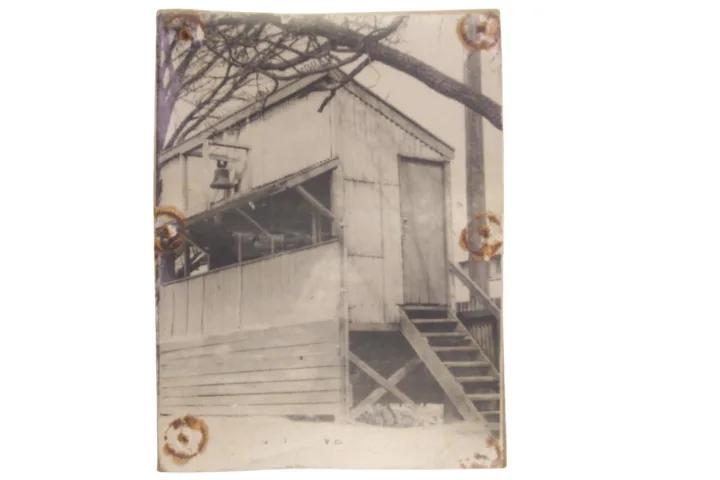
After enlarging the image, some details of the bell's design can just be made out. The design of the cannons, which are the suspension loops that a bell is hung from, appeared to match the ones on the 1858 bell in our stores. Added to this, the raised ridge that runs around the waist of the 1858 bell can also be identified in the photograph. To top it all off, the overall shape also seemed to match.
Despite the blurriness of the zoomed in image, we were able to establish these key details of the Eastern Oval bell's shape and design. This photographic evidence combined with the description of the bell from the 1968 Ballarat Courier article meant that the pieces were starting to fall into place.
Despite the lack of any definitive documentation that traced the bell's journey once it left the Eastern Oval, we were able to conclude that the 1858 bell currently located at the Gold Rush Centre is likely to be the bell that went missing from the Eastern Oval. Although we cannot say with any certainty exactly how the bell came to be at Sovereign Hill, we now know that the bell was still in use at the Eastern Oval in 1968 until the removal of the old Timekeeper's Box some years later.
A reunion
Finally, after all the digging and research, it was time to present our findings to the Memorabilia Committee, who had not given up their search for the lost Eastern Oval Bell. We met with Peter, Garry, and Michael to show them the bell we had identified as the likely match for the Eastern Oval bell. After going through the research with them, they were convinced that we had in fact found the missing bell and were very excited to see it safe and sound after all these years.
In consultation with the Committee representatives, we have been able to properly document the bell to ensure its history is preserved. The bell will remain at the Gold Rush Centre for safe keeping, and the Committee plans to display high resolution photographs of the bell and document its story in their club rooms for their members to enjoy.
The team at the Gold Rush Centre are extremely pleased that we were able to solve this mystery and provide access to the Eastern Oval Bell. Discoveries like this are one of the many reasons we do what we do here at Sovereign Hill, to help keep Ballarat stories alive and take care of the objects that tell those stories right here at the Australian Centre for Gold Rush Collections.
You might also be interested in