Keep rare trades alive
Your donation helps preserve the living skills, craftsmanship and cultural knowledge at the heart of Sovereign Hill’s rare trades program.
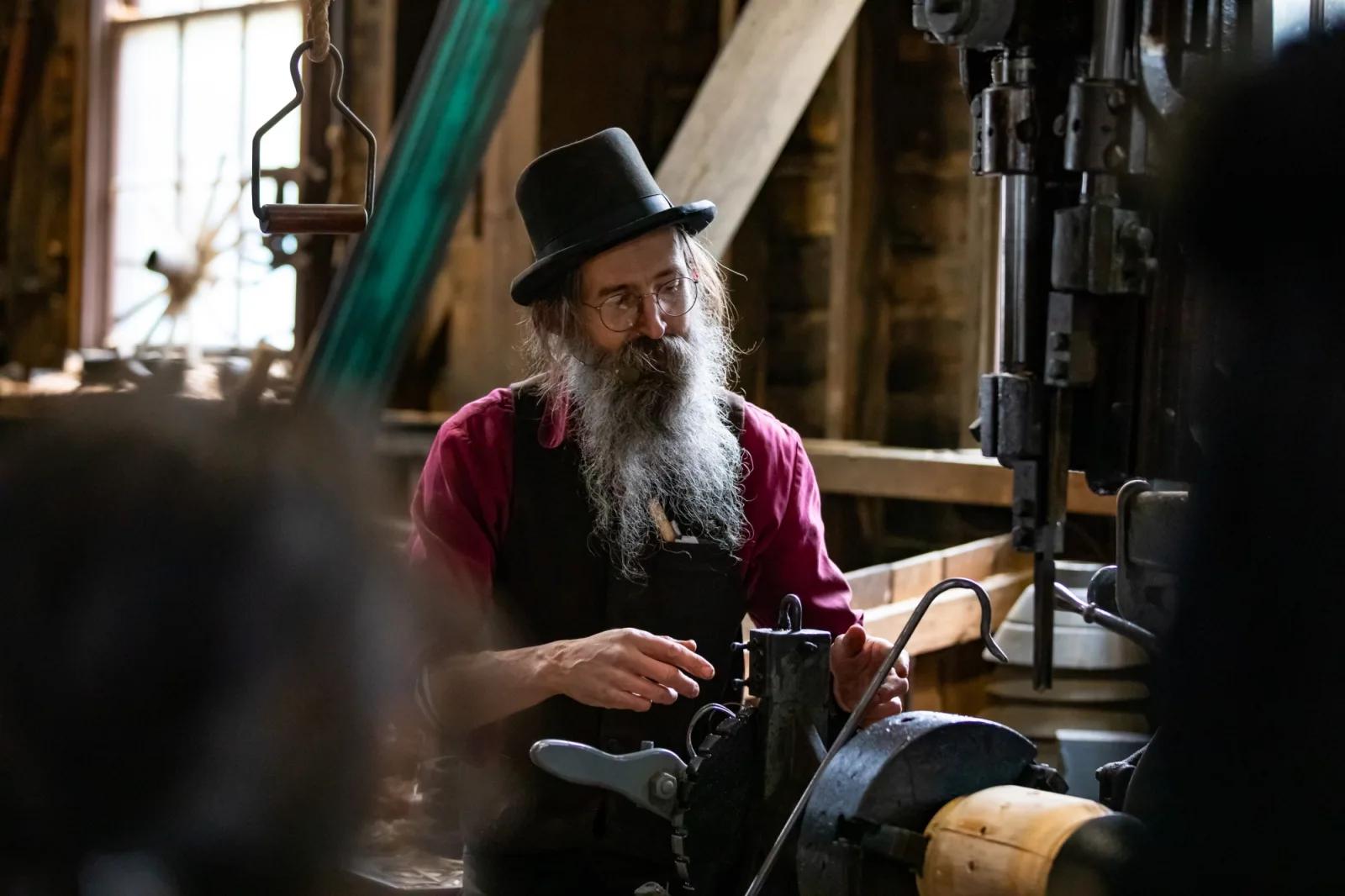
Hidden inside the Wheelwright’s Shop at Sovereign Hill is one of the most extraordinary pieces of machinery in our collection: a Defiance hub-mortising machine — an industrial giant capable of cutting the precise rectangular holes that spokes slot into when making traditional wooden wheels.
This machine is more than cast iron and gears. It represents a rare lineage of craftsmanship, engineering and ingenuity that spans continents, eras, and generations of wheelwrights. Its recent restoration has been a remarkable journey in heritage conservation — one that blends 19th-century technology with 21st-century innovation.
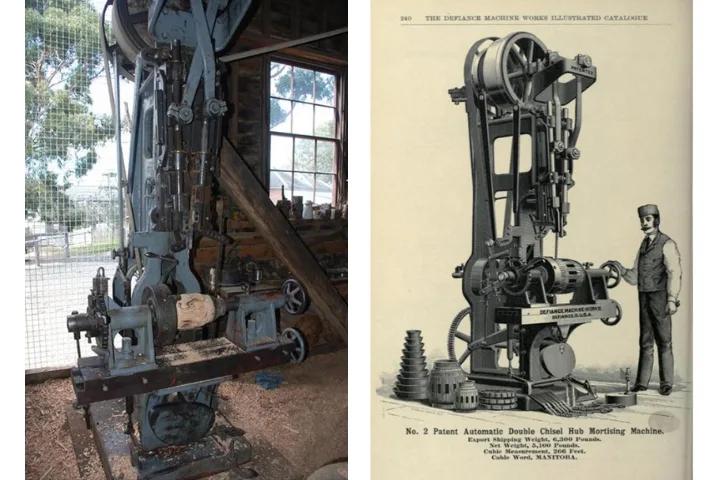
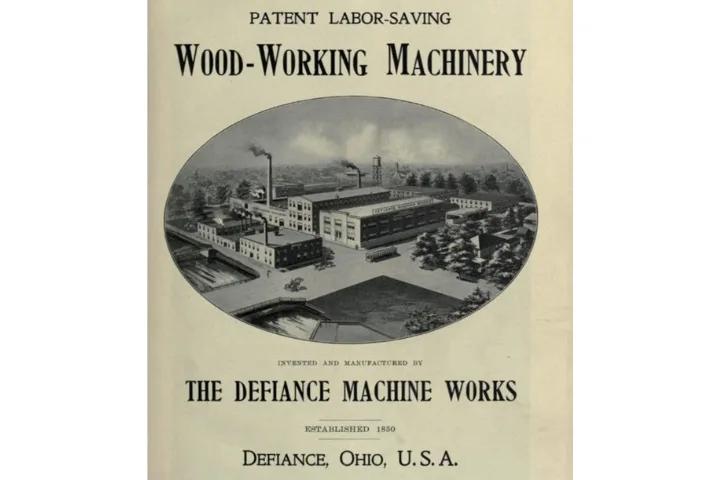
The Defiance Morticer was originally ordered by Healy Brothers of Newcastle in the early 1900s. After surviving a fire in 1919, it continued its working life until the business wound down in the late 20th century. Slowly, piece by piece, the machinery was acquired by wheelwright and engineer Mike Hendrickson, a respected figure in coach-building circles, known most famously for making the wheels of Australia’s bicentennial state carriage — now in the Royal Collection.
When Hendrickson retired, Sovereign Hill acquired his entire suite of specialised wheel-making machines. It was an extraordinary moment of good fortune and foresight. Nowhere else in the world holds such a complete, operational set of wheelwrighting equipment — so complete, in fact, that the Smithsonian Institution had reportedly been interested in acquiring it for their collections.
Heritage machines like the Defiance Morticer aren’t just rare, they’re irreplaceable.
Unlike most modern equipment, their mechanisms are entirely visible. Visitors can watch the elegant dance of gears, cams, pulleys, and clutches converting rotary motion into vertical chiselling, timed rotation, and precise spacing. Each mortice is cut exactly in sequence — an engineering marvel from the 1880s, still performing the job it was designed to do more than a century later.
But the visible beauty comes with a challenge: keeping such complex machinery running safely, accurately, and authentically requires deep knowledge. It relies on skills that are themselves becoming endangered.
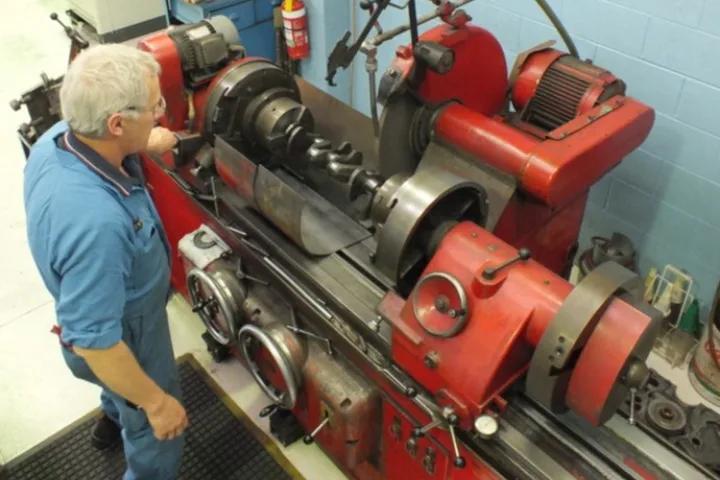
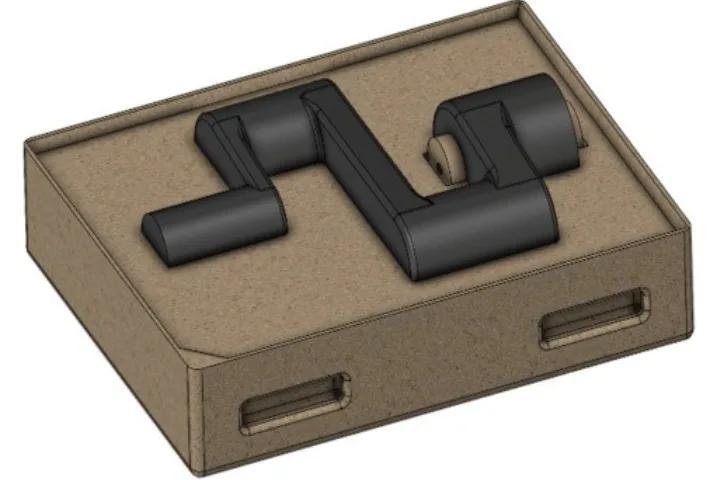
In recent years, the Morticer began showing worrying signs of wear: vibrations, misalignment, and ultimately a catastrophic discovery — a cracked crankshaft. Further inspection revealed that the existing crank arms were not only worn but badly mismatched in weight, putting dangerous stress on the machine.
What followed was an extraordinary partnership between Sovereign Hill’s skilled staff and local engineering specialists. Justin McCann and the team disassembled the entire mechanism and sought help from regional experts, M&W Engine Rebuilders and Hasco Foundry, who were captivated by the chance to work on such a rare, historic machine.
Using 3D scanning and 3D-printed sand moulds, the cracked crankshaft was re-created in ductile iron, then heat-treated by a metallurgist in Melbourne and precision-machined on a specialist crank-grinding machine. The engineering firms donated far more time and expertise than could ever be compensated, driven by the thrill of helping revive a machine patented in the 1880s and still used daily.
Once reinstalled, balanced to within a gram and fitted with newly machined bearings, the Morticer ran smoother than anyone at Sovereign Hill had ever experienced. In fact, the flaws uncovered during the restoration suggest the machine may never have run this well in its entire post-fire lifespan.
This project illustrates exactly why Sovereign Hill exists — not simply to display history, but to preserve the living knowledge needed to make that history work.
Maintaining heritage technology requires:
rare mechanical skills
traditional trades knowledge
specialist engineering networks; and
the ability to translate historic methods into modern equivalents without losing authenticity
It also highlights how heritage institutions rely on deep community partnerships. The enthusiasm from local engineers, delighted to help restore something truly unique, demonstrates just how culturally significant these machines are, even beyond Sovereign Hill.
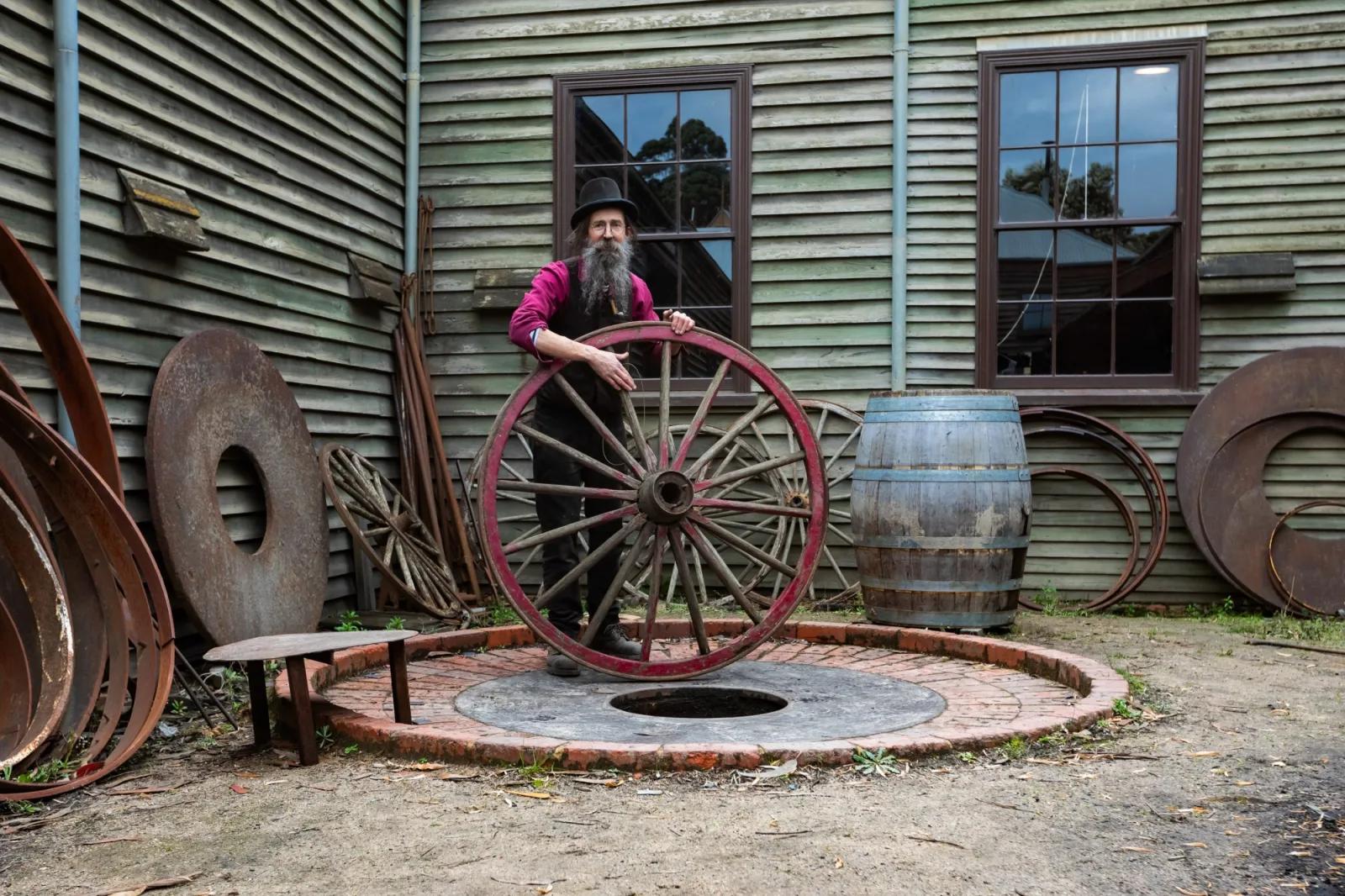
Although the Morticer is used today primarily for demonstration and for making ornamental wheels, its presence completes the full picture of historical wheel manufacture. Combined with Sovereign Hill’s other wheel-making equipment, including Hendrickson’s own contemporary machines, it preserves a craft that is almost entirely lost from mainstream practice.
Traditional wheelwrighting blends carpentry, metalworking, mathematics, geometry, and problem-solving. Hendrickson and craftspeople like Barry Hore brought a machinist’s precision to the trade, blending engineering principles with traditional methods. Their approach ensures that the knowledge is not only preserved but continually refined and adapted.
Machines like the Morticer, visible, mechanical, rhythmic, provide powerful interpretive moments for visitors. They show that heritage isn’t static — it moves, vibrates, and sometimes shakes itself apart.
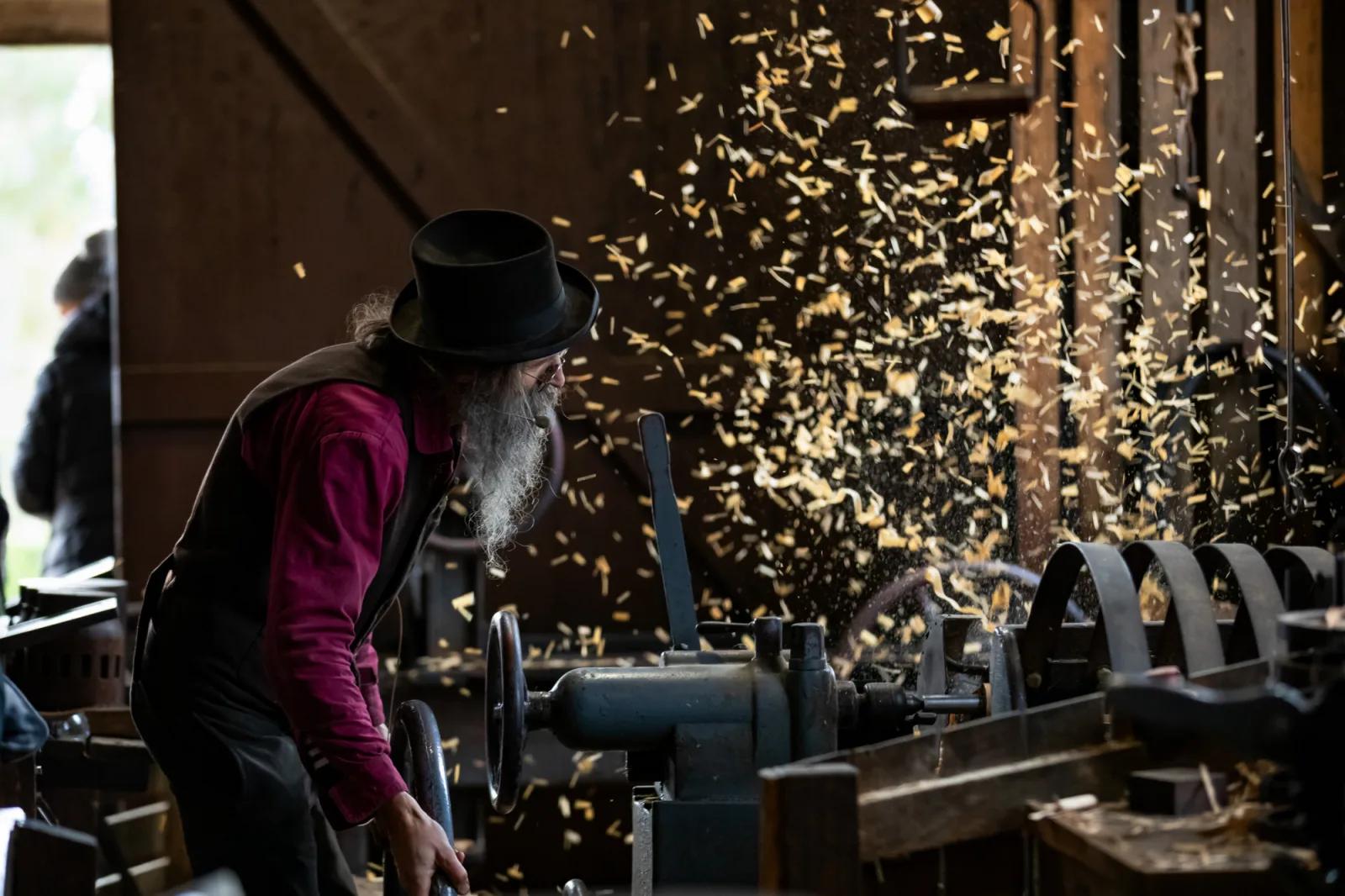
The return of the Defiance Morticer to smooth, reliable operation is far more than a mechanical achievement. It represents the survival of know-how: the accumulated, rarely written-down expertise of people like Hendrickson, Barry, Justin, and the specialist engineers who rallied behind this project.
It ensures that future generations will see wheelmaking not as a lost art, but a living process — one that still relies on the same ingenuity, collaboration, and craftsmanship that shaped life in the nineteenth century.
At Sovereign Hill, we don’t just care for objects. We care for the knowledge that makes them work.
By supporting Sovereign Hill, you help preserve a place where history is lived, not just told. Every contribution helps us care for our heritage site and continue the important work we do in conservation, education and storytelling.
Support Us