Thaliyu Dja (Yesterday’s Country)
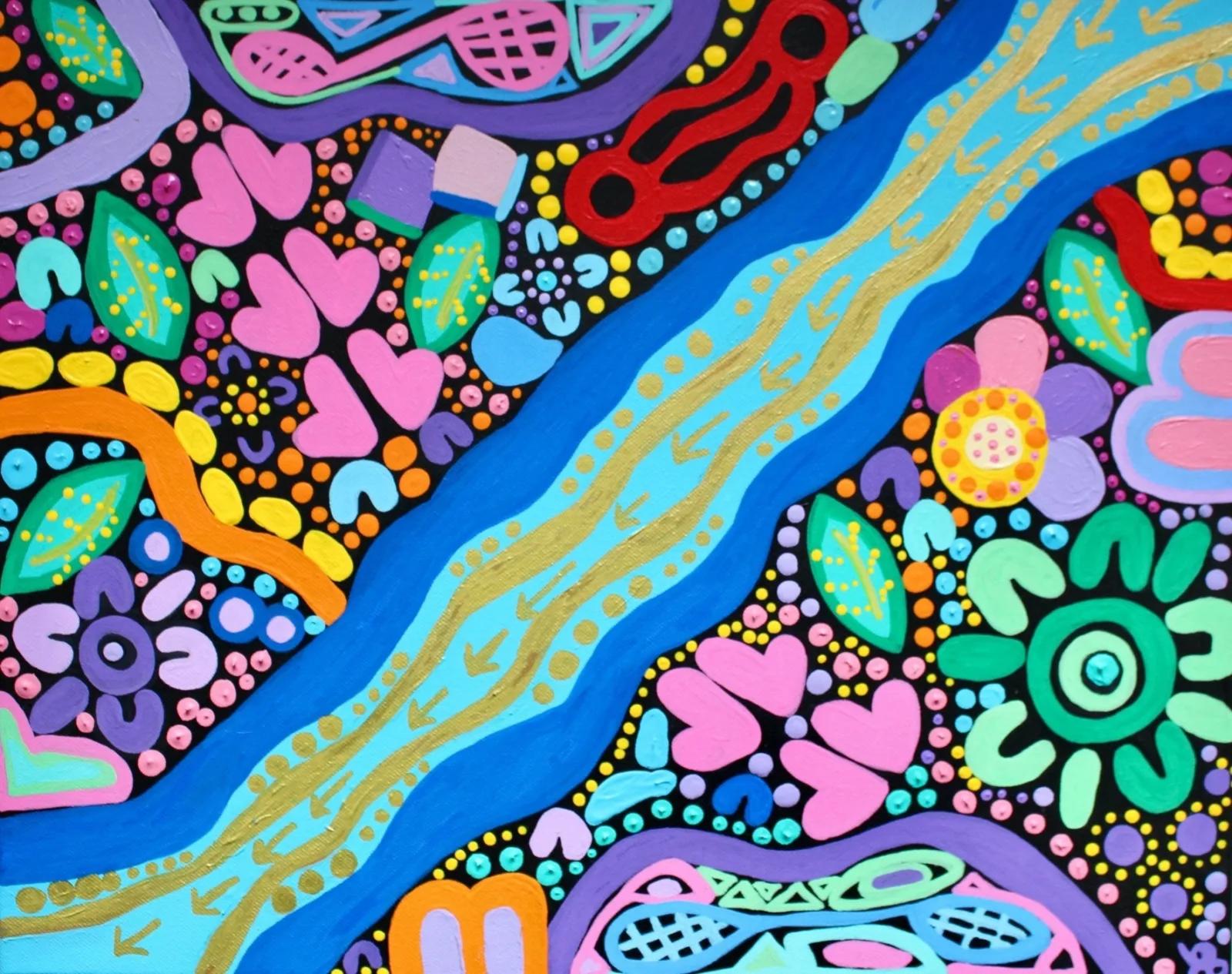
Artwork name: Thaliyu Dja (Yesterday’s Country)
Artist: Jenna Oldaker - Murrup Art
Media: Acrylic on Canvas
Dimensions: 16x12 inch
Koling wada-ngal – Let's Walk Together
We've formalised a partnership with Wadawurrung Traditional Owner and artist Jenna Oldaker from Murrup Art.
Jenna has given us permission to share her artwork, Thaliyu Dja (Yesterday's Country), which, according to the artist,
acknowledges both the significance of the gold rush in shaping the history of Ballarat and Sovereign Hill, and the enduring presence and resilience of Wadawurrung culture before, during, and after this period of change.
Through our Gnarrwirring Ngitj - Learning Together program, the artwork will enrich our exhibitions, education programs, interpretation, and digital storytelling, helping visitors gain a deeper understanding of the connection between People and Place.
Artist statement
The Wadawurrung People have long been known as the ‘Water People’, reflecting our deep connection to the rivers, creeks, wetlands, and coastal landscapes that have sustained our people for countless generations. Waterways were not only a source of food and life, but also places of gathering, travel, trade, and storytelling. In this artwork, the flowing blue pathway through the centre represents the yaluk (rivers) that continue to weave across Wadawurrung Country.
Interwoven throughout the waterways are rich gold tones symbolising the gold found within our lands during the Gold Rush era. Long before the discovery of gold by settlers, Wadawurrung People held a deep spiritual and cultural connection to Country and its natural resources.
The gold within the artwork acknowledges both the significance of the Gold Rush in shaping the history of Ballarat and Sovereign Hill, and the enduring presence and resilience of Wadawurrung culture before, during, and after this period of change. The gold flowing through the piece reflects both the physical richness of the land and the stories, strength, and survival of our people.
Scar Trees hold deep cultural significance for Wadawurrung People and remain important living connections to our Ancestors. Bark was traditionally removed in carefully shaped sections to create shields, canoes, coolamons, and shelter, leaving lasting scars upon the tree. These cultural markings remain embedded within Country and continue to carry stories of knowledge, survival, and tradition. The patterns and shapes surrounding the upper and lower edges of the artwork represent these Scar Trees found across Wadawurrung Country.
Meeting place symbols move throughout the artwork, representing spaces where people gather to yarn, share knowledge, celebrate culture, and strengthen community. The concentric circles and connecting pathways symbolise journeys across Country - the movement of people, stories, and traditions that continue to connect generations.
The traditional U-shapes represent people travelling across Wadawurrung Country, walking together along pathways that weave through the landscape. The varied colours and layered patterns throughout the artwork celebrate diversity, individuality, and the continuing strength of culture and community.
Nyatne baa gobata (Thank you and take care)
This image embodies traditional ritual knowledge of the Wadawurrung community. It was created with the consent of the custodians of the community. Dealing with any part of the images for any purpose that has not been authorised by the custodians is a serious breach of the customary laws of the Wadawurrung community.